- Dr Lamginsang Thomte, Postdoctoral Fellow, ANRF-NPDF (PDF/2023/002542), Department of Forestry, Mizoram University. Email: ginruo@gmail.com Mob: 9612686459
A new scientific study has raised concern over changing climate patterns in Mizoram’s capital. The research was carried out by Dr. Lamginsang Thomte, a Postdoctoral Fellow under the ANRF-NPDF scheme at the Dendrochronology Laboratory, Department of Forestry, Mizoram University, under the guidance of Dr. Keshav Kumar Upadhyay. The study examined 74 years of climate data from Aizawl. It found a steady rise in temperature, especially since the mid-1990s. The warming trend is seen in all seasons with highest rate of warming occurring in the months of October and November (post-monsoon season). Winters are becoming shorter and less cool. Other seasons are also showing higher temperatures. While the warming may not always be felt, even slight changes in temperature can disrupt the normal functioning of various living organisms such as plants and animals, including us humans. The researchers believe that this gradual warming may likely increase the vulnerability of people in terms of health, livelihood practices. The warming may also disturb the natural balance of the environment.
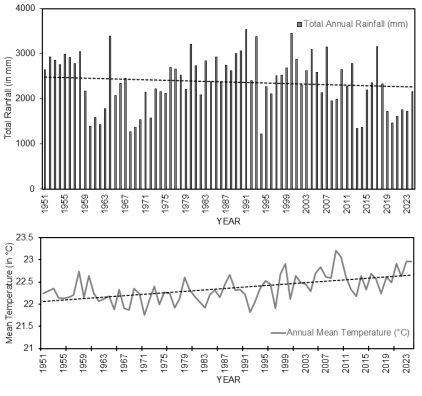
Figure Trends in annual rainfall and temperature (1951–2024)
The rainfall patterns in Aizawl are also changing. Aizawl has long been known for heavy rainfall. Annual rainfall in the city usually crosses 2000 mm. However, the study shows that rainfall is now becoming irregular. There is a general decline in rainfall during pre-monsoon, monsoon, and post-monsoon seasons. These seasons are vital for farming and water supply. Farmers in Aizawl district are already facing problems. Crops are getting less water at the right time. At times, heavy rain falls within a short period. This damage crops and reduces yield. Warmer weather is also helping pests and plant diseases to spread faster.
The water sources are under stress. Most rivers and streams in the region depend on groundwater and springs. These are now becoming less reliable. Lower rainfall means less groundwater recharge. This leads to reduced river flow and water shortages during dry periods. At the same time, sudden heavy rainfall is increasing. In some cases, rainfall within a few hours matches the average monthly level. This raises the risk of floods and landslides. The recent heavy rainfall in May 2024 caused by Cyclone Remal led to catastrophic landslides in Aizawl and various parts of Mizoram. The loss of precious human lives and substantial economic consequences of this event is a stark reminder of future hazards posed by climate change. Several researchers associate the increase in such severe cyclones to warmer than normal sea surface temperatures caused by climate change. Experts also warn that rising temperatures may also affect soil quality. Soil can dry faster and lose fertility. Dry soils also absorb less water and increase the risk of flash floods similar to how water flows rapidly over man-made drains. Health risks are also rising. Warmer conditions can help diseases like dengue spread to new areas where such diseases rarely occurred in the past.
The study warns that if current trends continue, Aizawl may face more extreme weather. Dry spells may last longer. Heavy rainfall events may become more intense. Landslide risks may also rise. However, the researchers say timely action can reduce the impact. Better water management, climate-friendly farming, and forest protection are key steps. Public awareness is also important.
The study makes it clear that climate change is already affecting Aizawl. Rising heat and changing rainfall are shaping daily life. Experts say proper planning and community support can help the region adapt to these changes.